
Why brands feel different
You have probably experienced the feeling when two brands sell the same thing at the same price, and one feels right while the other leaves you cold. Ask yourself why, and the answer is hard to find, because most people can’t express this type of thing. It’s a human reaction, not a set of words. Inside, you just know something’s different.
Curiosity drove a study in Holland that went looking for the answer, and it found one.
A simple question
In 2006, Kim Cramer and Alexander Koene began a study with one question: why do some brands simply feel better than others?
There was no guesswork going on here. In fact, it was very much the opposite… They built the study in four parts: a review of research on human motivation, a tool to measure it, two small pilot studies and one big survey.
The survey reached more than 8,000 people in the Netherlands, who rated 195 brands across 23 product categories. The team published the results in 2010 and has been continually reworking the system in the real world since then.
The three functions of a brand
To follow the study, it really helps to think about the three things a brand does for you.
First, a brand helps you recognise the basics. You know Nike and Adidas sell sports gear, and you know Coca-Cola and Sprite are drinks.
Second, a brand sets your expectations. You expect McDonald’s to be the same in every country, and you expect the same coffee at every Starbucks.
Third, a brand makes you feel something. Rolex says status and ambition, while Swatch says fun and creativity.
The study looked at the third function of a brand. The researchers say we know the least about it, but also that it is the strongest way to stand out.
What makes you feel good
The researchers say a brand lives in your head as a web of memories and feelings. When you pick a brand, inside yourself you ask one thing: how will this make me feel?
So they asked what makes people feel good, and they call the answer human drives. A drive is something you find important in life, such as loyalty, status or curiosity. The study read across philosophy, psychology, sociology, biology and neurology, and found 24 drives in all.
You have all 24, but how much each one matters to you differs, and it shifts with time and place. What matters today may not matter tomorrow.

How do you measure a feeling?
That left the team with a problem. People are often not aware of what they find important, and they find it hard to talk about it, so a list of questions would not get far.
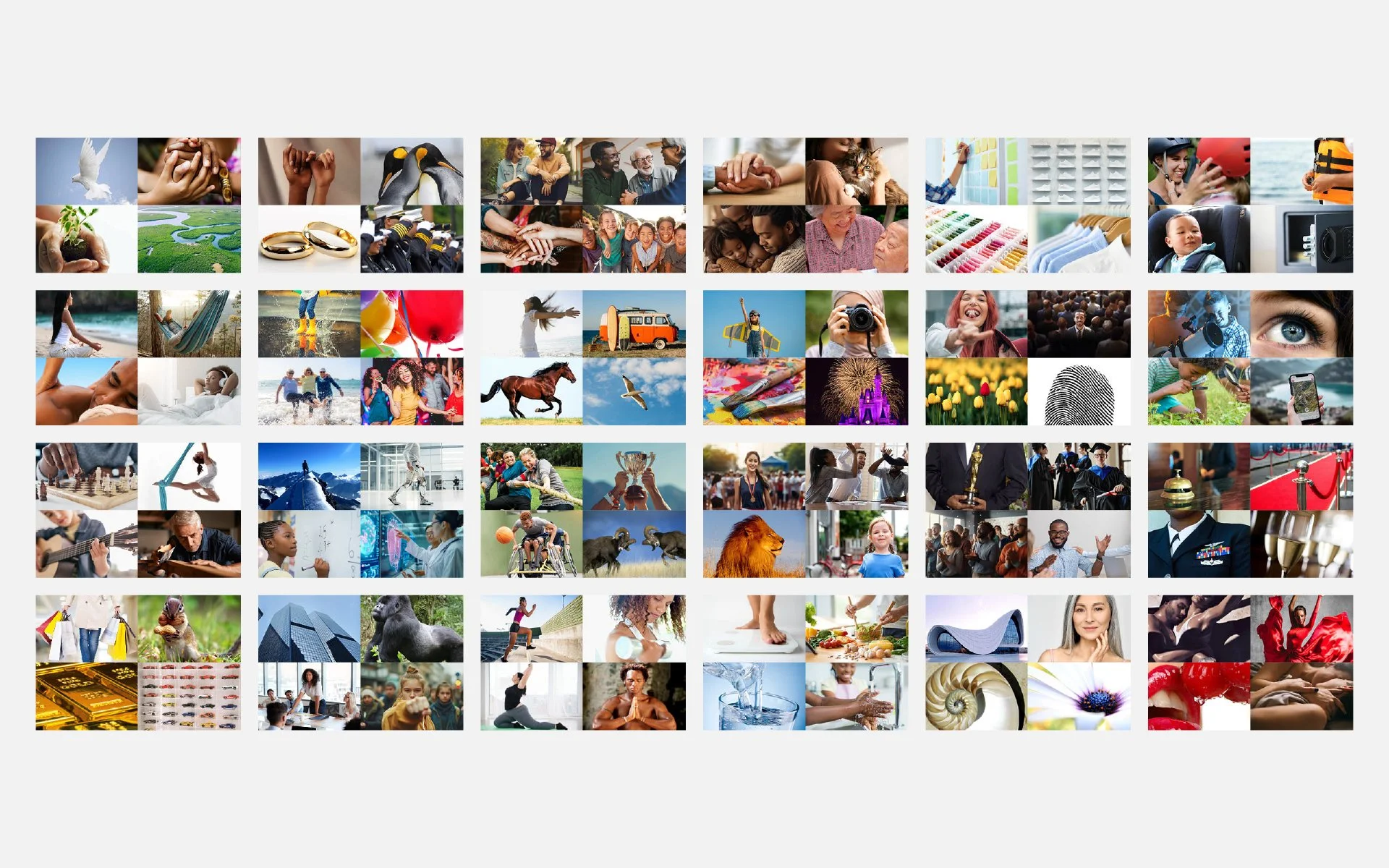
The team built a set of 24 cards instead, one for each drive. Each card shows four pictures and two words, and together they point to the world of feelings behind that drive. The card for power is a good one to mention. It first carried the words “power” and “dominance”, but early tests showed that these called up ideas of suppression, so they were swapped for “influence” and “leadership”.
The cards use pictures because you take in a picture faster than a sentence, and you react to it with less rational filtering. A picture can bring out a feeling before you find the words for it.
The team tested the cards with care. Using fMRI, they validated and optimised visual stimuli. Twenty experts, such as copywriters, architects and designers, judged the pictures, the words and the two together. Then 32 other people looked at the pictures alone and said what came to mind, and their answers matched the intended ideas closely. When people paired each set of pictures with its words, they got more than 90% right.
In the survey, people dragged the cards onto a scale. They scored how well each drive fits a brand, and how important each drive is to them in life.
Three findings on brand
1. The more drives a brand touches, the more you like it.
The link is clear: brands that touch more drives score higher, and they score higher still when they touch them harder. The study points the same way across 195 brands.
2. Breadth goes with appeal.
The 24 drives fall into five groups: Basics, Vitality, Attraction, Self-development and Ambition. The most appealing brands reach all five groups.
Audi is the best example. It was the most appealing car brand in the study. It also scored above other car brands on half of the 24 drives, most of which had nothing to do with cars.
Two parts matter most overall: Vitality covers health and fitness, and Attraction covers sexuality and aesthetics. This does not hold in every category.
3. The unexpected helps.
Most brands have a tendency to only touch the drives that fit their category. Skincare is about protection and beauty. Dove covers both, but it also touches connection and loyalty. That wider mix goes with its higher appeal.
Singapore Airlines does the same. Most airlines stress safety, order and innovation, but it adds sexuality, individuality, aesthetics and care. It was also the most appealing airline in the study.
These are patterns across many brands, not proof that one thing causes another. But the pattern was consistent.

What this means for a brand
A slogan can’t fix this. The most appealing brands have a mix of drives, and the right mix depends on the category, since the study found no universal formula.
Old advice says to pick one clear idea and stick to it. The researchers agree this still helps you set expectations, but they say it is not enough to win hearts. Their phrase is “the genius of ‘and’ instead of ‘either or’.”
Brand appeal also links to brand preference, so the more people love a brand, the more they choose it. Price and stock matter too, but feeling still counts. A brand should pick its drives on purpose and not leave this to luck.
The same idea works inside your company
That idea grew into 23plusone, a method that helps people say what they value. It is built around 24 cards, one for each human drive, and each card is a visual prompt for that drive.
You do not start by explaining yourself. You react to the cards and choose the ones that speak to you, and those choices give you a starting point for a conversation about what matters. In a session, people use the cards to introduce themselves, and then small groups use them to shape a purpose for their organisation.
Practitioners now use the method in branding, culture, coaching and consulting. You can use it to build a brand your own people recognise as theirs, and it starts with what matters to them.
Want to know more? Contact us here.