
By the 23plusone Collective

Put the websites of five competitors side by side and read their values pages. You will probably find the same handful of words on all of them: quality, trust, innovation, people first.
Every company in the category is expected to say these words.
This guide is for organisations and organisers who want to stand out in their category: how to run a brand values workshop on the 24 human drives, from who to invite, to a story people can use.
Are those words wrong? No.
They tell customers you're a serious player. They don't tell anyone why they should feel any differently about you.
The approach below is built on the 23plusone method and on what a study of 195 brands found about why some of them feel better than others.
In short:
Why companies in one category sound alike.
Who to invite and how to prepare.
The workshop in 4 steps.
Narrowing it down to three, and turning it into a story.
What to do afterwards, and what not to do.
Why companies in one category sound alike
Every category comes with expectations. Banks are expected to be safe.
Airlines are expected to be safe, orderly and modern. Supermarkets are expected to be good value.
When a company sits down to define its values, it usually starts from those expectations. Leadership looks at the market, the strategy and the competition, and the emotional side gets filled in at the end. The result is a list of values that is accurate and forgettable, usually placed next to a mission statement nobody quotes.
There's a second problem. Values written by a small group at the top often don't match the people who have to live by them. Customers and staff notice the gap long before anyone writes it down.
A good session works the other way round. It starts with what people feel, and it brings in the people who actually deliver the experience every day.
Who to invite
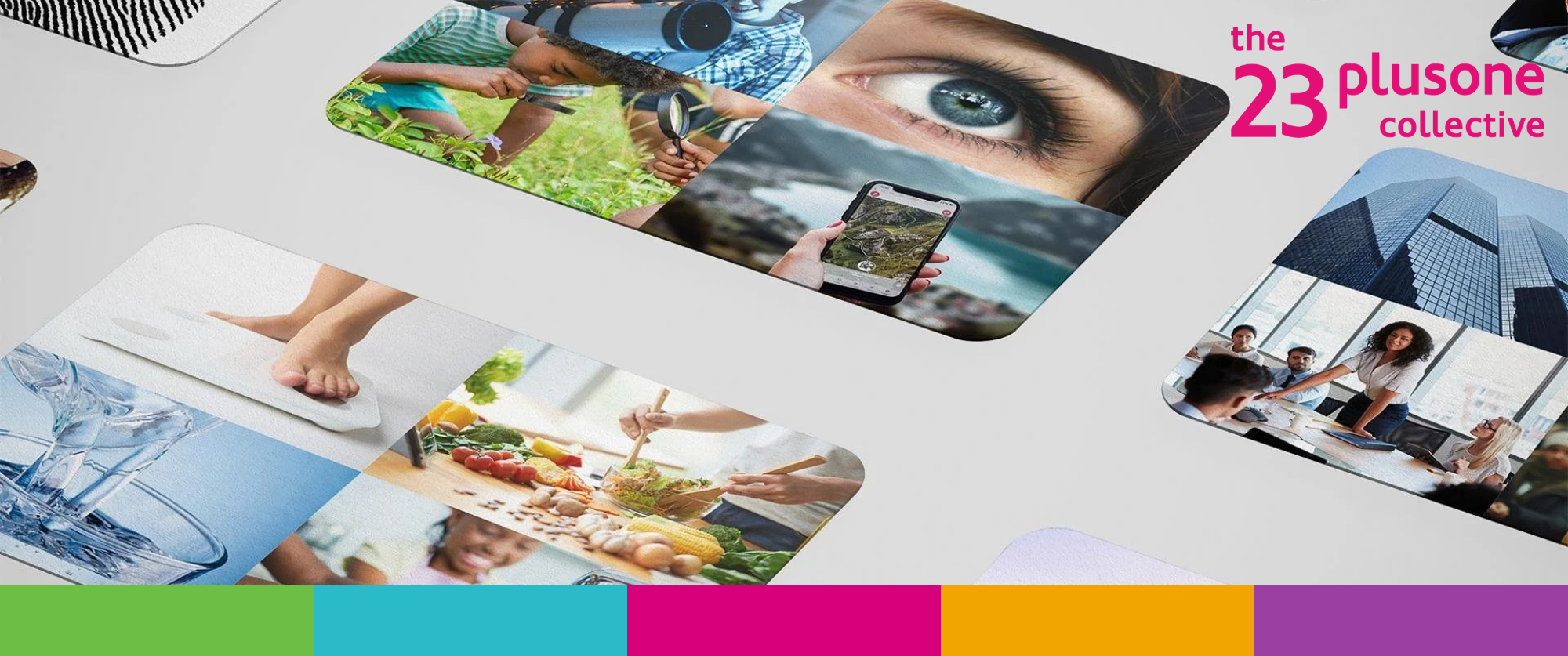
You don't need a room full of marketers. You need the people who are the organisation: the ones customers meet and the ones who keep the place running behind the scenes.
Mix roles and levels. Someone from production and someone from accounting can take part on equal footing, because nobody has to speak in marketing jargon to pick a card. From insight to action explains why no branding expertise is needed in the room.
A few practical points:
Size: up to 15 to 18 participants per session, split into smaller groups for most of the work.
Leadership: include them, but don't let them go first. Their choices anchor everyone else.
Outsiders: plan to test the result with a few customers or partners later, rather than inviting them on the day.
Someone neutral to run it: a person who knows the method helps a lot. A leader running their own session tends to steer it without meaning to.
Before the day
Agree on the question the session has to answer, and the objectives behind it. "What are our values?" is too broad. Better questions are "How do we want people to feel about us?" or "What do we give people beyond what we sell?"
Note: Core values for company culture guide how people work together. This session looks outward, at what customers should feel. The two should align, and it helps to know where your shared values already stand before you start.
Gather some input in advance: how customers describe you now, what competitors say about themselves, any recent research. Keep it short. The aim is context, not a slide deck that tells people what to think.
Decide on the format. A half day gives you a first set of drives. A full day lets you test them and start on the story.
If the group works remotely, plan for a shared whiteboard such as Miro with the cards on it, and separate video rooms for the small groups. For remote teams, a simple template on the board with the 24 cards and a built-in timer keeps things moving.
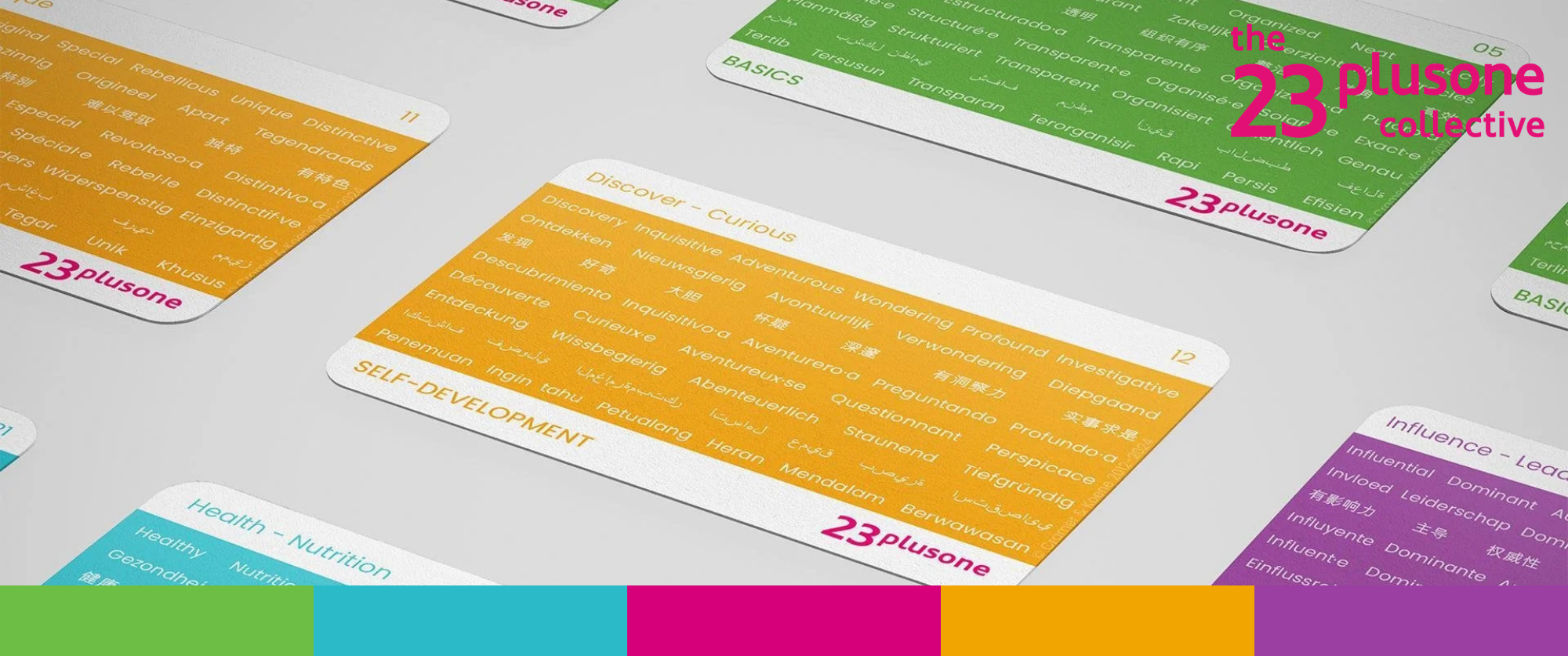
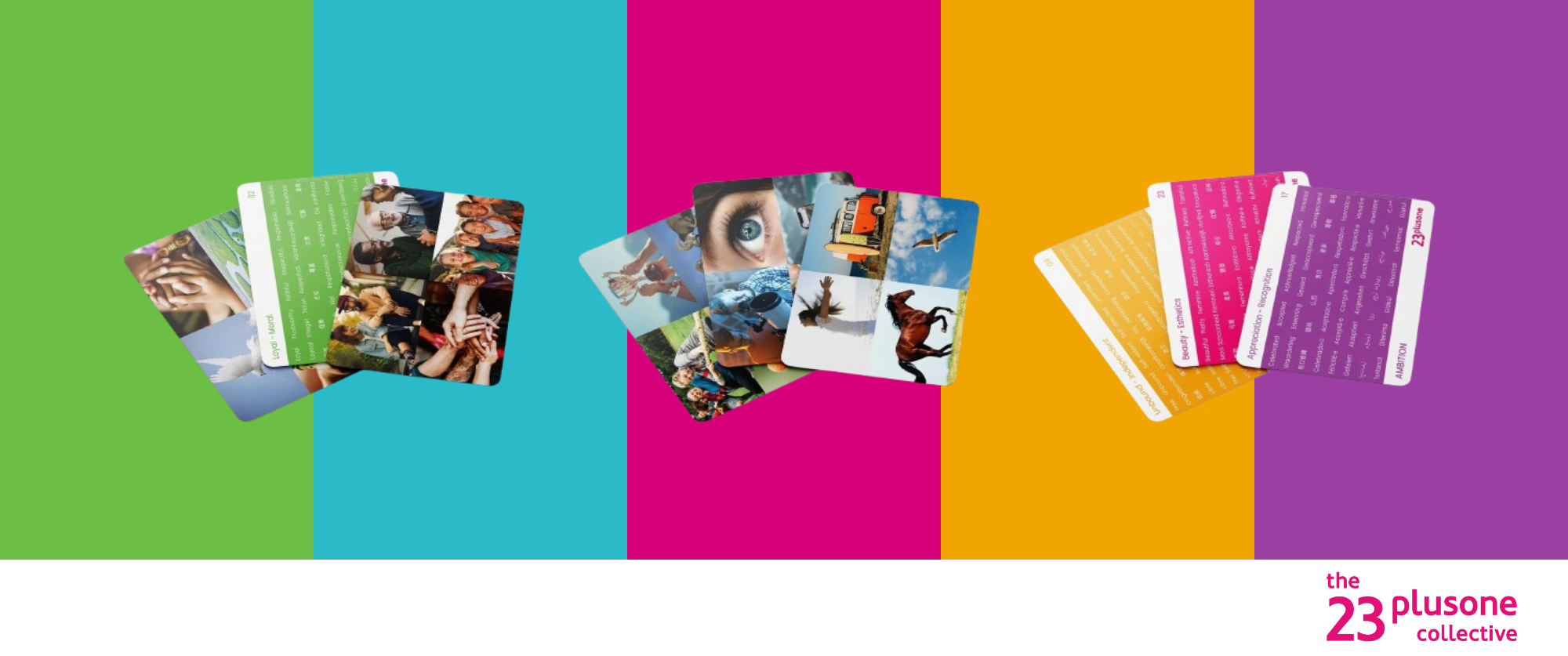
You'll need one deck of 24 cards per small group, a large table or wall, and a way to record the choices. Photos of the table at each stage are often the most useful workshop results you take away.
The brand values workshop in 4 steps
Step 1: Everyone chooses alone
Start with a personal round. Ask each person to choose the three to five cards that matter most to them, then introduce themselves with one. It takes ten minutes and changes the mood of the room.
People stop speaking as job titles, and participation goes up because choosing a card is easy. If anyone wants the words as well, the full list of the 24 is in how to define your values.
Step 2: How it feels now
In small groups, ask: which drives do people feel when they deal with us today? Each group chooses cards and explains why. This is the honest part, so encourage real-life examples, such as "Customers say we're reliable, but nobody says we're warm." The insights here are often the most useful of the day.
Step 3: What the category expects
Next, ask which drives every company in your category offers. Lay those cards to one side.
Do they still matter? Yes. They just won't set you apart.
In banking that might be Safe and Order. In fitness it might be Fit and Challenge.
Step 4: What you could own
Now the creative step. From the remaining cards, which drives could you trigger that customers wouldn't expect? Which ones do your people already live, even if nobody has said so?
This is where the unexpected drives come in. A logistics firm that adds Warm / Caring, or a law firm that adds Play / Fun, has found something competitors can't easily copy.
The test is whether it's true. A drive the team doesn't recognise in its day-to-day work won't survive contact with customers.
Narrow it down to three
Bring the groups together. Each group presents its chosen values, the drives it wants to own, and the others challenge them.
If you know the 1-2-4-All format from Liberating Structures, the same rhythm works for these discussions: alone, in pairs, in fours, then the whole room.
Then narrow it down. The 23plusone approach builds a triangle, called the Trinity, from three drives or pillars.
Three is enough to give the story richness and few enough to remember, which makes the Trinity a simple framework for decision-making later. The research also suggests a few laws worth checking your choice against:
Do the drives reach across more than one domain?
Is at least one from Vitality or Attraction?
Is at least one unexpected for your category?
Do they fit the culture of the people who have to deliver them?
Hold the vote until the discussion has done its work. If you need one, a quick dot voting round is fine.
Anyone can argue for a word that sounds good. The final values should be ones people can point to in their own work.
From the cards to a story
A set of three drives is a starting point. It still has to become a finished message. The next job is to write each pillar out as a paragraph of the story: what it looks like for customers and employees, and what you'll stop doing because of it.
At 23plusone, the Trinity forms the basis of the Brand Heart, a one-page summary. It connects the culture inside and the way you look and sound outside with the business strategy.
Two things help the writing:
Use the people's own words. The explanations given in steps 2 to 4 are better raw material than anything an agency will write from scratch.
Test it outside the room. Show the draft to a few customers, partners and new employees. People who weren't there spot jargon and wishful thinking quickly.
This is also the point where design and copy teams can take over, with a clear brief: these are the drives we want people to feel.
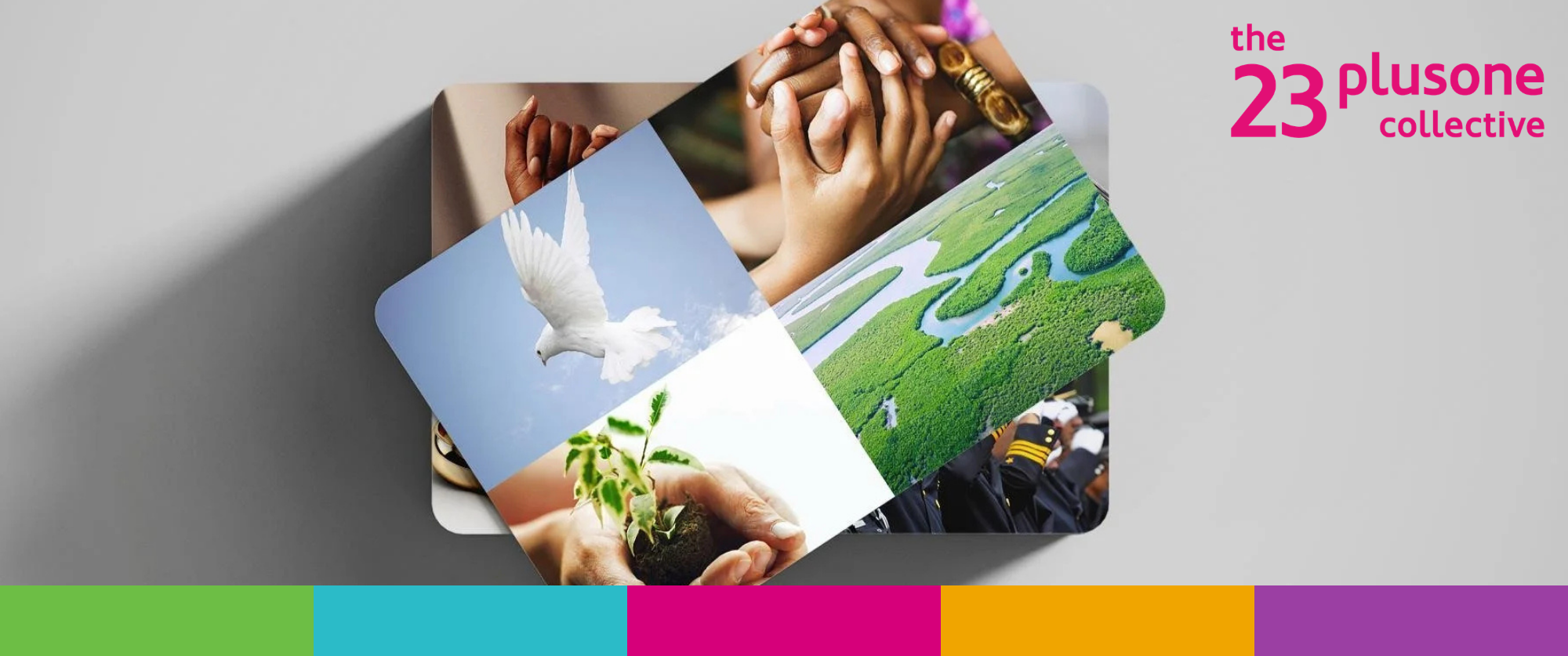
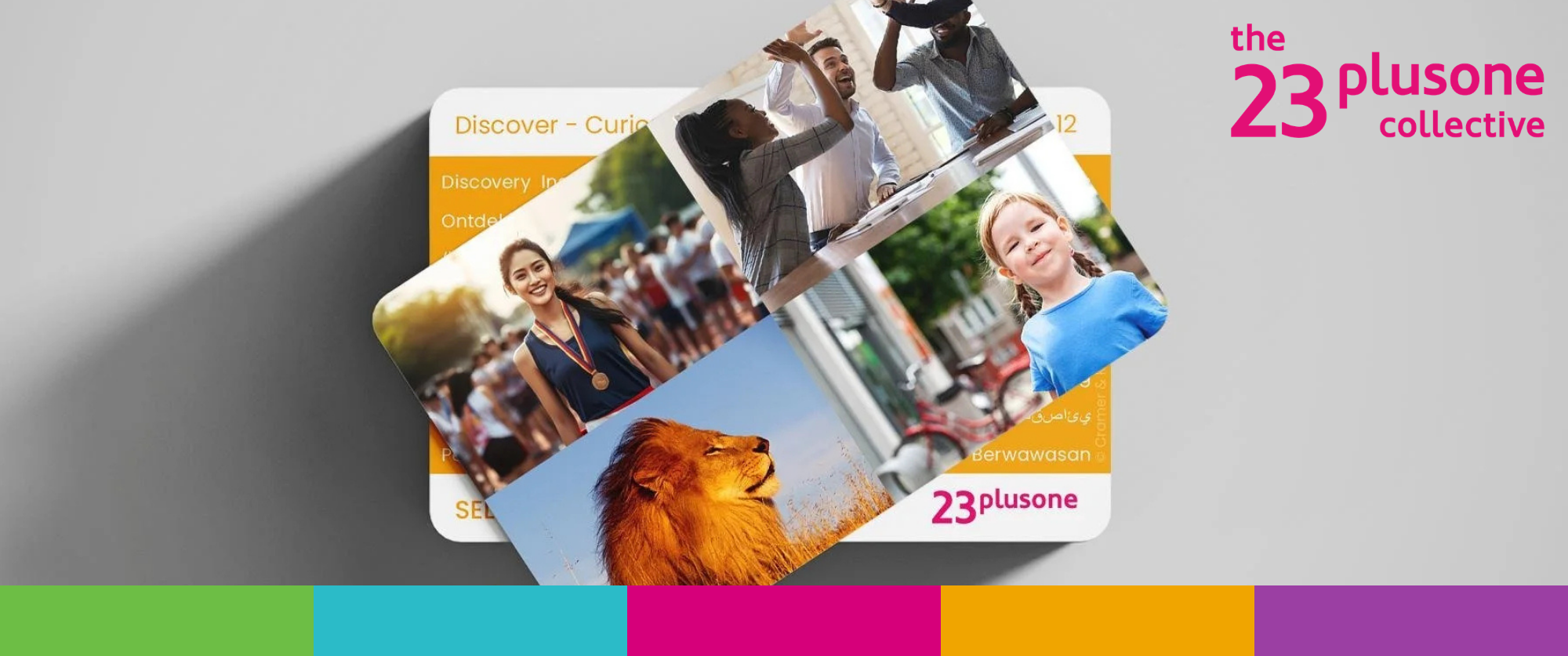
From practice: Some teams use the visuals on the cards as a first reference for imagery and colours.
After the workshop
The session is the start. What happens next decides whether anything changes.
Share the result widely, and explain how it was made. People are more willing to back a result their colleagues built. Then build it into things that already happen: onboarding, hiring, product reviews and the way you answer complaints.
Agile teams can add one question to their retrospective: which of our three drives did customers feel this sprint?
Come back to it. A useful check is the "now and later" exercise: a group picks cards for how the organisation feels today, then for how they want it to feel in a few months.
The gap is the work. It's a good way of seeing the invisible culture behind the logo.
This approach also works for organisations in transition. In a merger or a rebranding, people need something shared to hold on to, and internal work on the drives can start even before the new strategy is final. The case for linking values to business culture is set out in a separate article.
Anti-tip: Letting leadership choose first
Their cards anchor everyone else. Leaders pick in the same round as everyone, not before.
Anti-tip: Claiming only what the category expects
Safe and Order won't set a bank apart. Look for the drive nobody expects from you.
Anti-tip: Choosing a drive nobody recognises
If the people who deliver the experience can't see it in their work, customers won't either.
When this approach isn't the right fit
Be honest about the limits. Working with feelings produces a rich story, but it's harder to manage than a set of hard numbers.
If you need quick, measurable results from a campaign next month, start there instead. This method pays off over a longer horizon, as the story shapes what people inside and outside the organisation experience.

Questions people ask
How long does it take?
A half day gives you a first set of drives. A full day lets you test and narrow them. Writing the story usually takes a separate session.
How many values should we end up with?
Three pillars is a good target. More than five and people stop remembering them.
Can we run it remotely?
Yes. Put the cards on a shared board, use breakout rooms, and give people quiet time to choose before anyone speaks.
Do we need an outside facilitator?
It helps, especially when leaders are in the room. Our Mastery School trainers are clear that the cards are the easy part, and reading the room is the skill.
Conclusion: run it with the 23plusone cards
If you want an expert to run this session with your organisation, a certified expert can do it, or get in touch with the Collective and we'll help you find the right person. If you want to learn to run sessions like this yourself, Mastery School is a one-day course where you study the research, see the method in practice and profile a concept of your own, with your own set of cards included.
PS. Before your next strategy meeting, read five competitors' values pages side by side and count how many words you share with them.